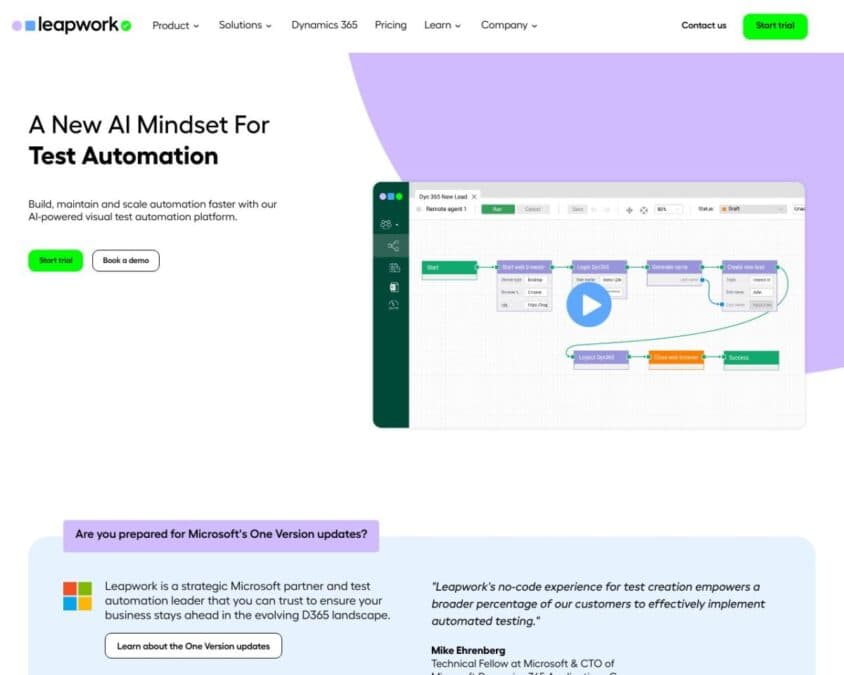
Leapwork for Salesforce is a specialized no-code automation platform designed to streamline Salesforce testing and integration processes. This solution is tailored to meet the unique needs of Salesforce users, enabling teams to automate complex CRM workflows, ensure consistency in testing, and reduce the risk of manual errors—all without requiring extensive coding knowledge.
Key features include:
- No-Code Salesforce Automation: Leapwork provides a visual, drag-and-drop interface that allows users to create automated Salesforce workflows, from simple data entry tasks to complex end-to-end processes, with ease and precision.
- Automated Testing for Salesforce: The platform supports automated testing of Salesforce components, including Lightning UI, Apex classes, and Visualforce pages. This ensures that customizations and integrations are thoroughly tested before deployment, reducing the risk of issues in production.
- Cross-Browser and Cross-Platform Testing: Leapwork allows for automated testing across different browsers and devices, ensuring that Salesforce applications function consistently across all user environments.
- Integration with Salesforce CI/CD Pipelines: Leapwork integrates seamlessly with Salesforce CI/CD tools, enabling continuous testing and deployment. This integration ensures that automated tests are part of the DevOps process, leading to faster releases and higher-quality applications.
- Comprehensive Reporting and Analytics: The platform offers detailed reports and analytics, helping teams to monitor the performance of automated tests and workflows, identify issues early, and optimize their automation strategies.
- Salesforce-Specific Templates and Components: Leapwork includes pre-built templates and components tailored for Salesforce automation, allowing users to jump-start their automation projects and reduce setup time.
Leapwork for Salesforce is an essential tool for organizations looking to enhance their Salesforce environment by automating repetitive tasks, improving test coverage, and accelerating deployment cycles. With its no-code approach, it democratizes automation, making it accessible to both technical and non-technical team members.